Sunday, August 14, 2022

Season of the Senses


And just like that, it's August. I have spent the last so many months IN IT. And how blessed it has been. My blogging has, however, taken a backseat, but I think sometimes we've got to let go of one thing so that we may embrace another. Where to begin?

Our meadow in full bloom

You may recall my mentioning crafting a homestead. And that we have, although it's very much still a work in progress. We have been working for the last few years to restore overgrown fields, once thick with autumn olive, barberry, honeysuckle and tied up in a bow of bittersweet, to their native, healthy state. Some very abiding native wildflowers had persisted amidst this bramble that was gradually turning to forest. Among them, lavender bee balm (Monarda fistulosa), wrinkle-leaf goldenrod (Solidago rugosa), common milkweed (Asclepias syriaca), and yarrow (Achillea millefolium). After having the land excavated, as carefully as possible to not disturb these favored inhabitants, I paced the bare soil scattering handfuls of native wildflower seed. This was nearly three years ago, and the fields are now abundant. 

The daisies behind our home (Leucanthemum vulgare)

This year, the daisies came. I remember, as a girl, patches of these on the this very same land, but never had there been a hillside of them. These had always been a favorite of mine. Now curious enough, they chose the hillside closest to our house. I think they knew they would be appreciated here. 

Yarrow (Achillea millefolium)

After the daisies, the yarrow began to reach for the sky, first with fuzzy white clusters on equally fuzzy stems, then one day their flowering faces were in full bloom, full as the white clouds that passed overhead. What a joy to wander out and crush these leaves, emitting their sage-lemon-eucalyptus aroma, and snip stalks to hang to dry for future tea and tincture. And it was around this time, that I dived deep into forest therapy school. I have long been a forest bather and had been leading forest bathing walks for the last couple of years, but this particular program, I had admired for a good long while and finally it just made sense. I spent six weeks, led by two special women and accompanied by eight other students (all female), sitting, sniffing, listening, watching, and exchanging stories with the forests and fields. By the time, I'd finished the program, I had become a yellow birch, held a conversation with sweet fern, and ate lunch with a groundhog. These were just a few of the highlights.

Common milkweed (Asclepias syriaca)

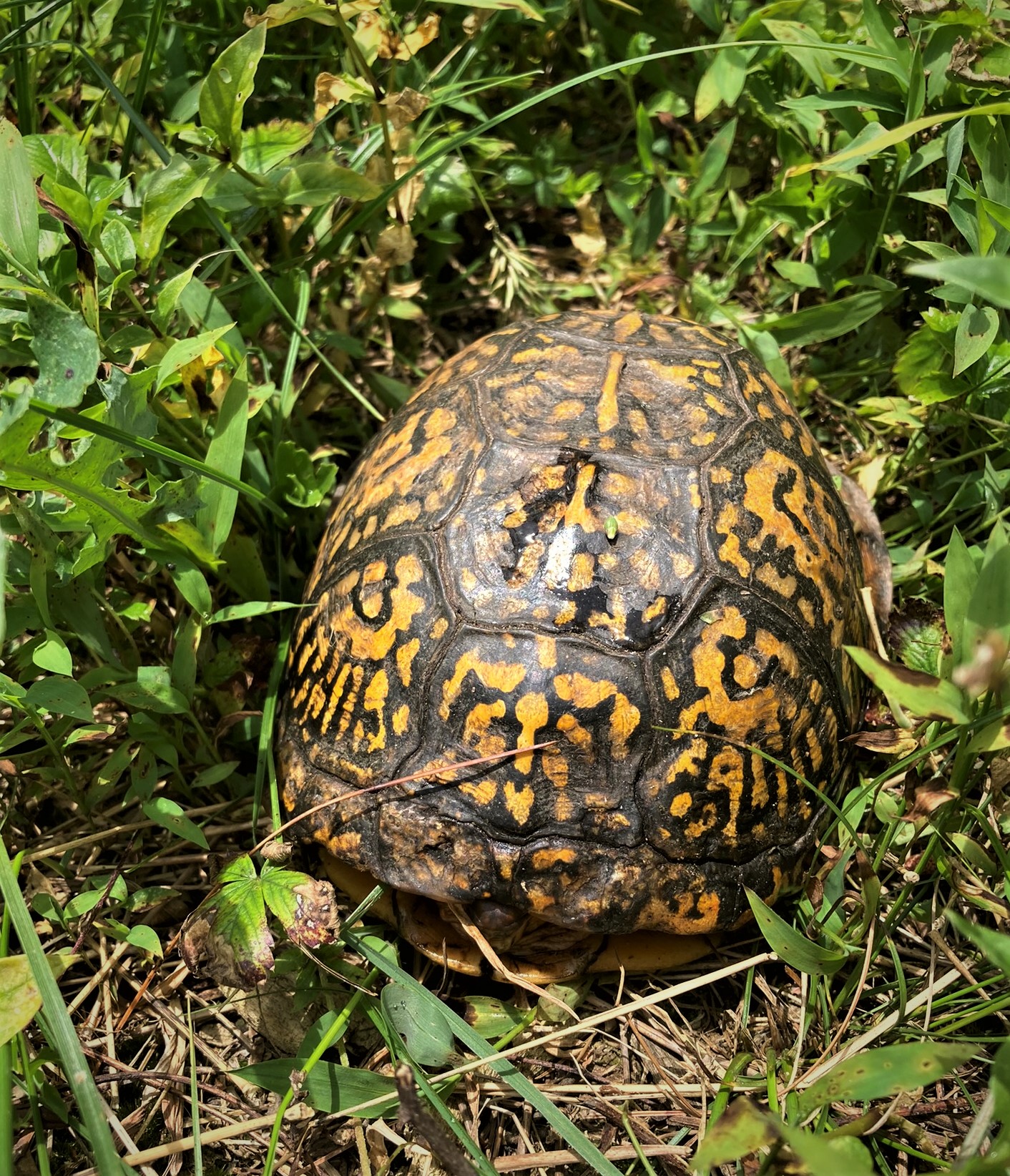
During this time, the milkweed blossomed, and its fragrance wafted past our porch at night. Sweet like candy. The spring peepers turned to throaty croaks. One day, while weed-whacking paths through our meadows and clearing a way to the sweet fern and highbush blueberries on the edge of forest, we came upon a box turtle. We gasped in delight and horror at the same time, for how close we had come with our whirring cutting machine. Had he or she climbed the steep hill from the pond below? We stumbled upon this turtle several more times over the next week before it either retreated to the pond or moved deeper into the grasses.

Box turtle - categorized as threatened in Pennsylvania

All the while, the garden flourished with plants long appreciated and new. Spilanthes and calendula, nettles and sweetgrass. Summer squash and plum tomatoes, cucumbers and dill. We discovered lemon catnip and lemon verbena this year and accented these with some lemongrass. I reveled in harvesting the catnip that grew wild on the hill beneath the cedar tree above the daisies. I drank a lot of homemade herbal iced tea.

Spilanthes acmella, commonly named toothache or eyeball plant

I whipped up salves and collected wildflowers and herbs with tea blends in mind. I introduced a whole lot of folks to plants through edible and medicinal walks and seminars but leaned heavily on acquainting folks with the plants through the senses with forest bathing and nature journaling, medicinal tea and wild snack workshops. I loved witnessing folks really connect with the plants. I had no time to write or work on the house, nor did Scott, who was right there beside me working this land and tending to the garden and playing many a show for folks eager to hear live music again. Although, he somehow, still found time to write eight new songs. But he didn't eat lunch with a groundhog. Just sayin'.

Houskeeper's Heal-All salve, available at the Better World Store Two in Milford, PA or just request a tin! This is my personal go-to for dry skin, bug bites and sunburn

A Forest Bathing and Wild Plants Walk with the Delaware Highlands Conservancy

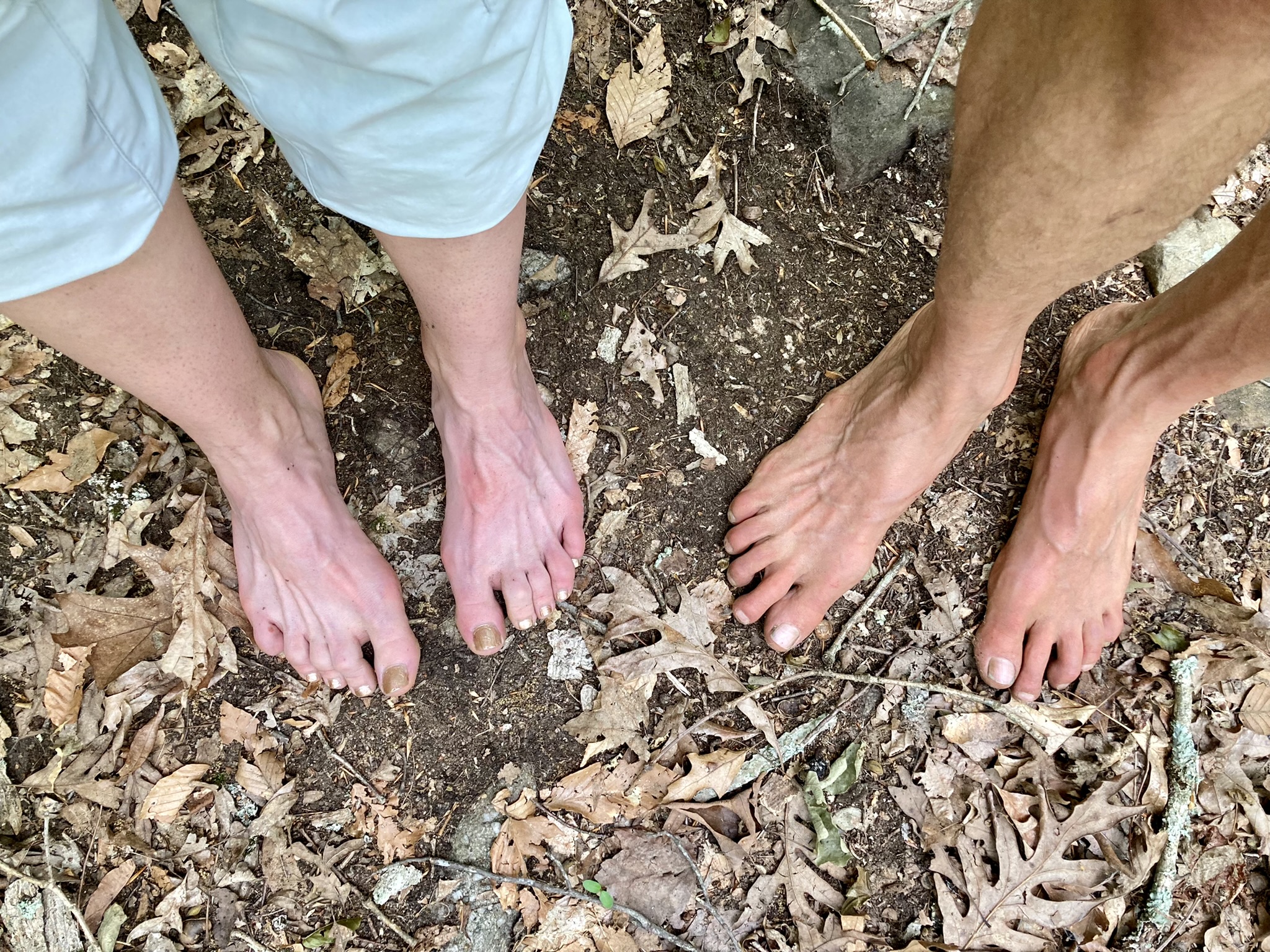
I also attended friend and fellow long-distance hiker, Ken Posner's, Barefoot Academy. Now, he may have called me a graduate, but I think I got a long way to go. Ken has not only has spent a lot of time barefoot but backpacking and trail running barefoot and has miles of expertise to share. I have never been sheepish about walking barefoot across the lawn or dancing barefoot on a good barn floor, but hiking, like real hiking barefoot? No way. We meandered - which I learned is what you do when barefoot, speed drops to a minimum - over gravel and stone, leaves and roots on the Long Path along the Bashakill and near to Gobbler's Knob. What a thrill to not only feel the earth but "see" the trail through my feet. There was so much information coming through my soles that I suspected it fed my soul too. This was taking another sensory connection to a whole other level.

My very pale feet and Ken's well-browned. Take to barefoot hiking and goodbye hiker tan!

Then I got covid. And Scott got covid. And my parents, whom are in their mid-seventies, got covid. All of us for the first time. And all movement stopped. I know today's strain is supposed to pale in comparison to the original. Yeah, well, strain BA.5, is no joke. Fevers for days. Muscle aches that rivaled those after a car wreck. Fatigue. Brain fog. But then, just as I was starting to feel better, what I had feared most about catching covid happened - my sense of smell and taste vanished. It happened gradually over the course of a couple of days, so much that I didn't even notice until I reflected on it. Then it was just gone. I sat huffing a bottle of lavender essential oil to be certain, then eucalyptus. Nothing. I crept out to my porch and pinched off a lemon catnip leaf, then lemon verbena, then white sage. Nada. Worse yet, all I could smell was the sick, a smell that I can only describe like that of soggy crackers. It had already been almost impossible to eat - Scott and I had been subsisting off toast, and child-sized portions of roasted potatoes - but even with my appetite finally returning, a heavily seasoned bowl of curry was mere gruel. 

Bee balm (Monarda fistulosa), also called wild bergamot and Oswego Tea

Meanwhile, as we laid about, slowly recovering in our air-conditioned box, the rest of the world played out. My most favorite flower, lavender bee balm, reached its peak in our surrounding meadows and yellow-headed coneflower from seeds we had planted several years ago unfurled its petals for the first time reaching high above the other flowers and grasses and craning with the weight of its own inflorescence. I know only of such happenings because we took periodically took meanders around the property, wandering about dizzy and hot in the weeks-long heat wave as long as we could muster. 

Yellow coneflower (Ratibida pinnata)

Repeatedly, I crushed leaves of bee balm, and did my best to remember the smell. I crushed yarrow leaves, too, and made strong teas of ginger and bee balm and catnip, feeling only a tingle on my tongue from ginger's spice. Every non-smell I experienced, filled me with worse dread. It is estimated that between five and twelve percent of people who lose their smell during covid, mostly women, never regain it. For some others it returns but remains muted. For the majority of people, it returns entirely within several months, of these some smell within days and others it takes several months or more. All the while, one is not smelling, the parts of the brain that process smell are inactive. Too much inactivity and the brain just stops processing it all together. At least this is what the medical system reports thus far. I knew my chances were, overall, pretty darn good that it would return, but all I could focus on was the possibility that it might not. 

A lush scene in nearby Delaware State Forest

The thought that I might walk into damp woods and never smell the wet earth and pine and green moss again was loneliness defined. That I might never smell that candy-like aroma of milkweed flowers wafting on the breeze or the licorice-apple scent of freshly crushed goldenrod leaves. That I might never smell a Florida swamp or dusty road. That I might never smell Scott when nuzzling his neck. That I might never smell the puppy-smell of Amos. My world would lose all sparkle. The loss of taste would be another tragedy, but smell, that, to me, was even worse. Perhaps the fact that I was still sick made this all the more dramatic, but the darkness was real. I realized how very weak I might be if I were to lose an even more relied upon sense, like eyesight, or a physical ability, My God, if I could not walk. 

Violet leaves - suspected Roundleaf violet (Viola rotundifolia) - along trail at Van Scott Reserve

After some days, my sense of smell and taste did return. To recover from covid we largely utilized the plants that grew around us, sipping teas, dropping tinctures, and inhaling steam. However, it was a few doses of doxycycline that coincided with the return of my senses. I had stumbled upon some scholarly articles about the studies in which this had proven effective and in desperation, gave it a shot. Who knows what did it, but I am now fully back in my body and the world. Writing now about the experience, I feel a bit shallow, for being so terrified and so very depressed about my momentary loss. For I fully acknowledge the lives this virus has claimed and the lives it has forever diminished, and my scenario was but a tiny blip in my day-to-day. Scott has recovered too, and my parents are slowly but steadily feeling more themselves. But it's all relative. Scott and I and our families had been little affected - in the big picture - by this virus, so this experience left its mark. Most of all, it made me value. Now, the smell of fresh cut wood or boggy pond mud makes me smile and the sweet taste of a garden-harvested tomato or the cool taste of cucumber lights my heart. I breathe a little deeper when snuggled in bed with Scott and Amos and eat a little slower, savoring each bite. Likely the illumination, the gratitude that this experience has cast upon me will with time fade. I will again take my sensory experience for granted. But I am going to do my best to keep this recognition close. Our days are filled with so much beauty, our senses the channel through which we may experience it. So, hear me now, I'm going to keep my eyes wide and listen close, breathe deep and walk barefoot, and crush and taste all the leaves I can, with gratitude.


Summer azure on yarrow (Achillea millefolium)

And so, I'll close my wandering post with this photo of a new-to-me summer azure moth, appreciating a perch atop yarrow. I encourage each one of you wander, metaphorically and literally, to appreciate the smallest of beauties, the simplest of pleasures, the everyday joys, for I do suspect that's what it's all about.

If you'd like to learn what herbs we used in fighting covid and quelling symptoms, please shoot me an email. I would be happy to share with you a full list of what we found helpful.


Saturday, March 12, 2022

The Magic of Travel


Saint Mark's National Wildlife Refuge, Florida

There is truly a magic in leaving the familiarities of home and wandering. As soon as I take flight - whether by car or foot or very rarely by plane - I feel a levity, a levity that is so very challenging for me to find when rooted in place. Now don't get me wrong, there is a lot to be said for rootedness - roots go deep into layers of earth, of knowing, and are intertwined with all other things in that place.  I don't think I could travel without them. I need a certain constancy to even yearn for the unknown. As we continue to build our homestead here in Pennsylvania, there will be writing about roots. But now, oh the freedom of movement! I am truly in love with it.

Our camp in the prairie

The very smell of our travel trailer puts me in the zone, clears my mind, and pulls me into the moment. And so, when we spent our first night in Virginia, at a lovely little campground called Walnut Hills in the Shenandoah Valley, I found myself giddy. So did Scott. Giddy despite our weariness and the fact that we'd been preparing for this trip for days. The day before we'd stumbled through a foot of snow while lugging essentials from our home and backpacking gear from the shed across the property to the driveway where the trailer sat, dug through a three-foot deep snowbank to find the hitch that we'd left on the ground after last spring's excursion, and then with a hammer, chipped away at a truck bed full of ice to locate the pin that holds it in place. Then we'd awoke and driven seven hours to arrive here in the dark, only to park the trailer in yet more snow, but none of that mattered. We'd seen the landscape with eyes and hearts wide open and had only more days spent alive and awake to look forward to. 

In Asheville, NC with dear friends on the Fonta Flora Trail - in remembrance of the African Americans who lost their lives building the railroad that travels through the Swannanoa Tunnel

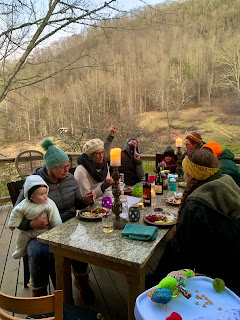
Dinner at Rachel and Steve's in Sandy Mush with the fam

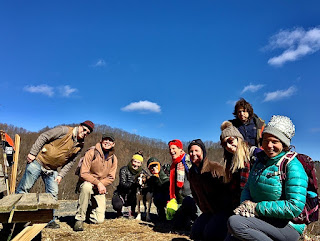
Our first stop was Asheville, where we spent a solid week visiting with friends while parked comfortably in our dear friend, Rachel's driveway. Every morning we had new visitors drop by our barn-style door. Every day we played and laughed and sang and broke bread. We had been blessed to have a number of these sweet souls - an extension of our family - visit us up north, but due to covid precautions, it had been two full years since I'd been in this, my second home. No matter the distance, nor time that passes, when back in those mountains, this community of ours makes it feel like no time has passed at all. It was tough to leave that cozy driveway, but warmer weather and our Florida Trail family beckoned.

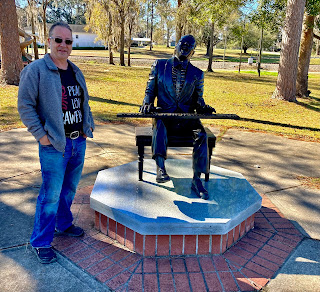
Scott with Ray Charles in Greenville, Florida

We headed south, landing at a Hipcamp in Greenville, Florida. Greenville is in the panhandle, near to Madison and Lee, two towns through which the Florida Trail passes and where we'd even considered purchasing property. Under the arching limbs of live oaks draped in Spanish moss, we drove into its rural outskirts that night and as we whizzed by, exclaimed at the sound of peepers. Even by the darkness of night, we were enchanted. After a beverage, we were already researching Greenville on Zillow and came upon a charming home built in the 1920's in historic downtown with a price that was a steal. The next day we dipped into town to take a look. There is little to be found in Greenville: several churches (many of them in cement box buildings - one proclaimed a Prophetess), a diner, a well-kept park, and train that seems to roll through on the regular. But it was in that park that we stumbled upon this humble town's remarkable claim to fame: Ray Charles. Greenville was his homeplace. This was quite the prize for my own blues man, and although the historic home wasn't quite for us, Greenville has now made it onto the list of potential seasonal homesites.

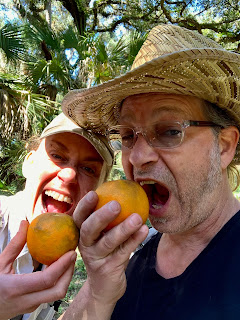
Wild oranges growing on the Florida Trail - we actually found some sweet(er) ones this time!

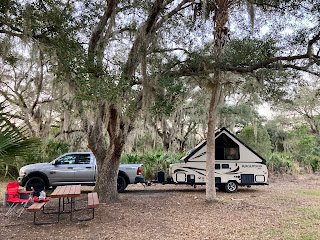
Then it was a straight shot south, takin' a big ol' bite of what we consider the fruit Florida - its prairies and swamps - and at its core, all those folks we hold dear in this state. First stop was the Florida Trail in Okeechobee County. We set up camp beneath a majestic live oak thick with Spanish moss, resurrection fern, and wild pine and took to walking. With every scratchy cabbage palm and sandy stretch, I was in heaven. SO MANY PLANTS to admire, plants with which I now shared relationship. A subtle knowledge that surprised me. Perhaps we are no longer alien in this landscape. 

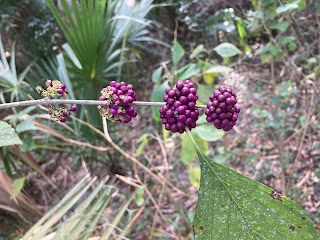
Beautyberry (Callicarpa americana) - with ripe edible berries that were lightly sweet with a hint of spice

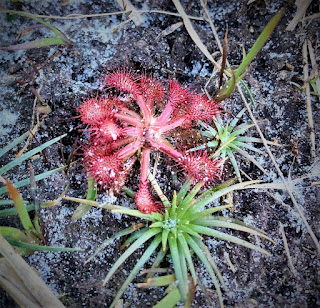
Sundew (Drosera) - so many of these hidden along the sandy trail near the pond just north of Starvation Slough campsite. Sundews are carnivorous, each one of those paddles covered in tentacles that secrete a sticky fluid rich in digestive enzymes to consume passing prey. 

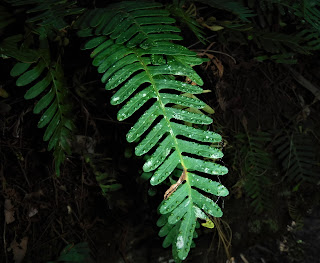
Resurrection fern (Pleopeltis polypodioides) - aptly named given that it desiccates during dry weather and "comes back to life" in presence of moisture. 

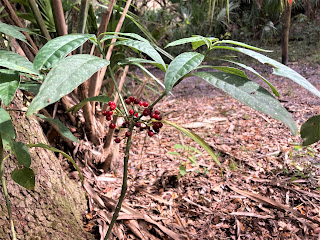
Wild coffee (Psychotria nervosa) - although a member of the coffee family, it is of a different genus (Coffee is genus Coffea) and contains no caffeine. Although, its berries do resemble those of true coffee, they should not be used as coffee substitute as they can reportedly induce severe headaches.

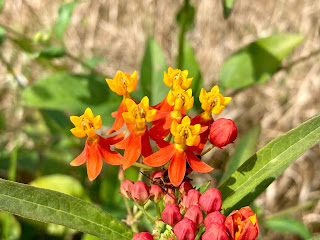
But still, we didn't know how good we had it. We made the foolish move of leaving our little slice of heaven, just as the first real waves of relaxation were hitting us, and headed south to Everglades National Park. Honestly, the most memorable part of this whole experience was the drive - the air was thick with smog and the smell of hot pavement and exhaust - as we passed along the western edge of the state through such allegedly prestigious places as West Palm. However, meeting tropical milkweed redeemed the trip. Amos agreed, it wasn't worth the hassle of parking on the edge of the city and paying a hefty fee to enter a non-dog friendly park. We scurried back to the prairie quick as we could and were happy for it when we returned.

Tropical milkweed (Asclepias curassavica) - beautiful as this plant is, I have recently learned that tropical milkweed is non-native and plays host to a parasite that is detrimental to the growth and migration success of monarchs. Native milkweeds can also host this parasite (that are carried by the monarchs themselves) but when the plants die back in winter, the parasites die back with them. Tropical milkweed can remain in bloom throughout the winter - like this one here - building up successive generations of the parasite, which is how the danger creeps in. A sad story that a plant so beautiful could be so harmful.

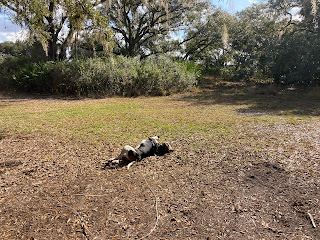
Amos reveling in returning to the prairie

More days in the prairie followed - we'd learned our lesson. When you got a good thing, soak it up. We were present without effort. Our conversations organically shifted from the work to be done at home to whether that was a live oak or a sand live oak and what snacks were best to have on hand for the thru-hikers we were beginning to encounter. Our minds were free of the checklists and rumination. We slept like babies, even Amos when the coyotes yipped and howled out in the prairie grasses. We were refreshed. It was time then to visit friends we had not seen since our road trip two years ago that was cut short by the pandemic.

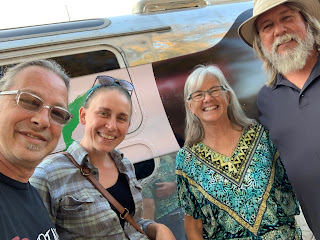
With Joan Jarvis - the fairy godmother of the trail - active with the Florida Trail on so many levels and a trail angel to many!

With Sandra Friend and John Keatley of Florida Trail Hikers Alliance, authors of The Florida Trail Guide, and experts in all things Florida! We wouldn't have made it down the trail without their expertise!

With Randy and Luanne Anderson, aka Chuck and Tigger of the Florida Trail Hikers Alliance - they're always on the look-out to lend a hand to the hikers!

What light these friends of ours brought to our journey. Were it not for these folks, we wouldn't have had the experience that we did in 2019 on the Florida Trail - one of community and enthusiastic support - and perhaps our hike wouldn't have been the success that it was. If so, would we still have the affection that we do for this landscape and be making, what's turning into, an annual pilgrimage down to Florida? Likely not. And had we not hiked the Florida Trail, we never would have had the opportunity to get to know these sweet souls. Those who don't long-distance hike, sometimes think that thru-hiking is escapism, but really its quite the opposite. Long-distance hiking is all about connection.

Shired Island

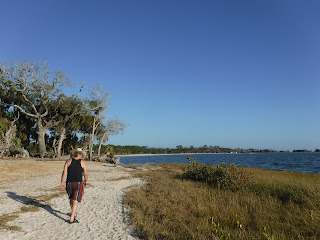
Continuing northward, Scott suggested we check out a beach he'd seen on the map: Shired Island. There was little to be found online about it, but what we did know was that it was part of the Lower Suwannee National Wildlife Refuge and that there was a first-come/first-serve campground there with twelve RV sites. We decided to take our chances. What we found - after driving through long stretches of delightfully old Florida - was a li'l strip of land once inhabited by indigenous peoples who had piled its shore with oyster shells. Driftwood worn smooth by ocean water lay scattered on a beach lined with palms and cedar. Sites were still available and they sat yards from the gulf. As I said, we'd learned our lesson. We knew we had it good - so we stayed a few days. And I caught up with old plant friends and became better acquainted with new plant friends as well.

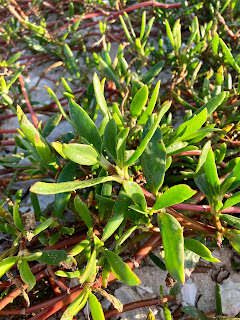
Sea Purslane (Sevuvium portulacastrum) - this purslane is not lemony but salty. A tasty trailside nibble and related to our purslane in the northeast!

 
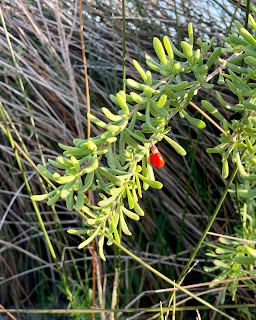
Christmas Berry (Lycium carolinanum) - this seaside berry is related to goji berries and reportedly edible, however it is a member of the nightshade family and identification is key! The edibility of some other species is unknown, and one species is known to be toxic (Green Deane - Eat the Weeds). I decided to wait until I got to know this genus a li'l better before consuming.


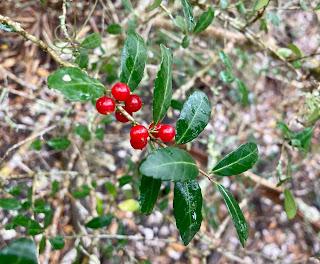
Yaupon (Ilex vomitoria) - our one North American caffeine containing plant. This is a member of the holly family, as indicated by those perfectly round red berries and evergreen leaves. However, unlike coffee berries, it is the leaves that we can cook up to make a perky beverage. Simply steep the fresh leaves in hot water, or roast in an oven and steep for a richer tasting tea.

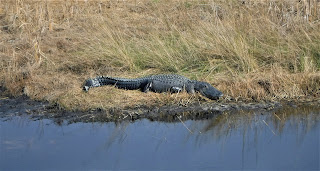
Continuing along the gulf, we made our way to the charming fishing village of Saint Mark's and the nearby Saint Mark's National Wildlife Refuge. This is by far Scott's favorite place along the Florida Trail, and one of mine too. Here we walked long dikes, admiring the sunbathing gators, the glistening marsh waters, squat cabbage palms, and much to our thrill- a lone flamingo. Town was just as charming as we recalled it and we found that a piece of property we had been eyeing here the last two times we passed through is now up for sale. Of course, we are considering it.

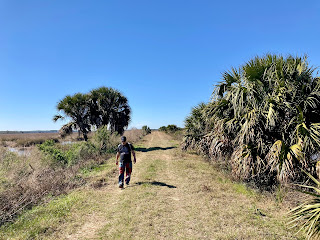
Scott on the Florida Trail at Saint Mark's National Wildlife Refuge

So many gators sunbathing along this stretch of trail and throughout the refuge

The lone flamingo - it is said that he/she arrived after Hurricane Michael and has returned to this spot ever since. To see a flamingo is a rare sight, given that there are believed to be only 400 wild flamingos in Florida, but to find one this far north, is even more unlikely. We had been tipped off by Vera Hurst to keep an eye out for it! 

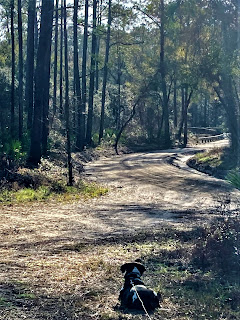
Onto Apalachicola National Forest we journeyed to revisit some of our favorite portions of the Florida Trail. We spent a good chunk of time along the Sopchoppy River, where the trail winds along sweet tea-colored waters punctuated by cypress knees and humps of white sand. Overhead long leaf and slash pine towered, and we walked beneath arbors of craggy sand live oaks adorned in Spanish moss and old man's beard. It was also while in Apalachicola that we crossed paths with the most thru-hikers. We had hoped to lend some trail magic to this year's crew and so were well-stocked with ice cold gatorades and sodas and oranges from Robert is Here fruit stand down in the Everglades. Every morning and evening, at Oak Hill Trailhead, where we'd parked our trailer, we had regular passerby. Amos came to lay at the end of his line, peering down the road in anticipation - who might hike up next! And when they didn't come to us, we went to them, even hiking several pizzas out to a group of six one evening at Porter's Tract campsite. Apalachicola National Forest is a dreamy location to spend so many days - we were but a tiny speck in over 500,000 acres of wilderness - but a long stretch for a thru-hiker without resupply. By our end of our time here, we too felt as if we had slipped into the thru-hiker state of mind.

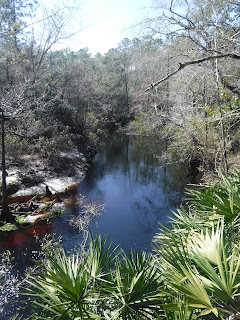
The Sopchoppy River as seen from the Florida Trail

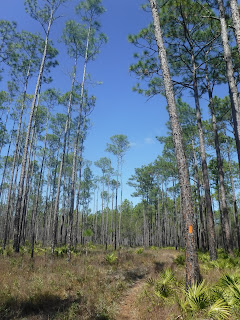
The Florida Trail weaving through pine forest and saw palmetto in Apalachicola National Forest

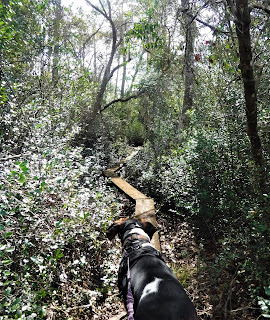
Amos walking boardwalk on Florida Trail near Camel Lake.

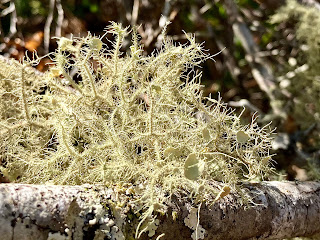
Old man's beard (Usnea) - this lichen is one that all backpackers should know well. It acts like a backcountry anti-biotic, effective against viruses, bacteria, fungi, and protozoa. Make it into a tea, tincture or poultice to fight infection. Just be mindful in harvesting. . .lichen grows very slowly and you won't find old man's beard just anywhere.

Amos waiting for the morning's hikers at Oak Hill Trailhead in Apalachicola National Forest


Hanging with Gravy, who is hiking the Eastern Continental Trail (which includes the Florida Trail) - super nice fella with an immense appreciation for life!

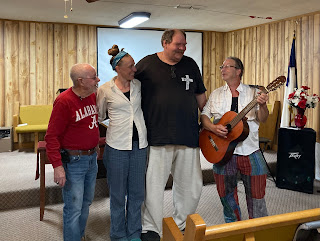
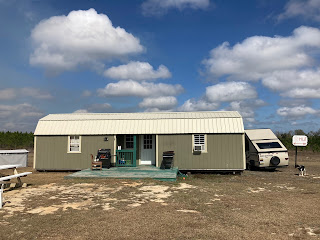
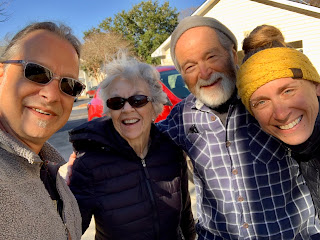
No trip to the panhandle is complete without a visit to Hillcrest Baptist Church in Altha, Florida. We fondly remembered staying here during our thru-hike and getting to know Wilton Quattlebaum, the man responsible for its generosity towards hikers. Upon our return, we found Wilton hosting two hikers in his Wilton Hilton - an upscale outbuilding complete with air conditioning, real beds and linens, and a stocked fridge (to name just a few amenities) - and he had more hikers coming the next day. Wilton was just as big hearted and sweet as we remembered and we had a wonderful time joining in fellowship and song with Pastor Forrest Parker and his wife Becky, guitarist Robert Wilks, and Wilton's daughter Turtle. Guess what Turtle wants to do when she finishes high school. . . hike. Our hearts soared that night, again reminded that this is why we hike, to meet folks like Wilton along the way.

With Robert Wilks (left) and Wilton Quattlebaum (middle) - pastor of the Hillcrest Baptist Church and founder of its hiker hostel.

The Wilton Hilton - this is the main sleeping quarters and living area. Just behind this building sits another shed outfitted with a washer/dry, a couple more beds, a kitchen area and bathroom with shower. 

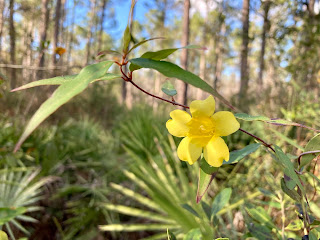
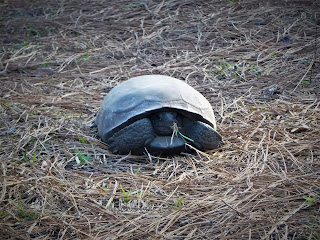
It was just as hard to leave Wilton's as it was the first time, but carry on we had to, for every journey eventually reaches its end. February was almost to a close and so we headed east and then north. We made a short stopover in Osceola National Forest, an underappreciated public land, through which the Florida Trail passes for18 miles. We hiked the driest portion of trail we could recall here - this stretch is known for wet feet - and breathed deep the smell of pine pollen, sphagnum moss, and yellow jessamine. A lone gopher tortoise graced us with his passage and we camped beside a gum swamp that night, soaking up the song of the peepers.

Yellow Jessamine (Gelsemium sempervirens) - a native flowering vine with flowers so fragrant you can catch their sweet scent on the breeze.

A gopher tortoise in Osceola National Forest. These tortoises are invaluable to the ecosystem. Their burrows provide shelter for over 350 species, such as snakes, frogs, and even burrowing owls.  It is also suspected that tortoise burrows can promote seed germination and in turn support plant diversity.

In Wilmington, North Carolina we were welcomed with open arms. Scott's mother has relocated there from Sarasota, Florida, and his two brothers are also in the process of moving there from New Jersey. Add in Uncle Jim - whom y'all may remember picked us up from Big Cypress Swamp on our thru-hike - and it was a lovely two days of catching up, storytelling, and lots of good laughter.  

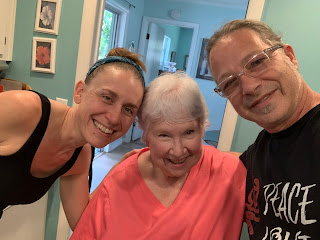
With Mama Weis and Uncle Jim

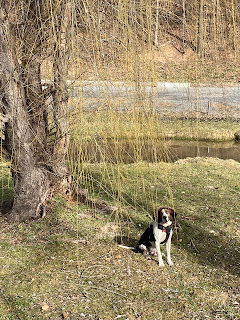
And just like that, exactly one month later, we found ourselves back in Walnut Hills Campground in the Shenandoah Mountains. Amos happily found his spot beneath the weeping willow that he remembered and took a quick dip in the creek that had been far too cold the last time we were here. He pranced around with a confidence that it sometimes took days in one place for us to see in Florida. Virginia or not, I think he knew that this grass, these trees, this air smelled like home. For us, it was bittersweet. We were nearly home. We didn't want it to end. Already I missed the smell of wet sand and sulfur and damp moss and pine needles and fire, the sight of crooked tree limbs and fat-bottom trunks.

Amos under his willow at Walnut Hills Campground

 Now home, we are settling back into the familiar sight of snow-dressed white pines and the tall, straight trunks of white and red oaks with limbs reaching skyward. The temps are chilly, but our days are longer, and somehow, even amidst our white landscape we can feel the promise of spring in the air. We'll be working on strengthening our roots, so that when the opportunity arises yet again to spread our branches and leaf out, we'll be ready. Until then, we'll weave that magic, that levity of spirit into our days, making each one a little brighter. When the time is right, they'll be more magic awaiting us in lands far away.

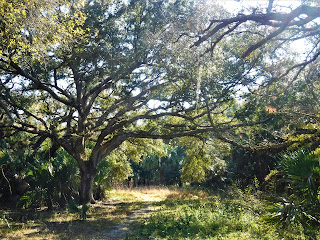
The Florida Trail in Okeechobee County, meandering through an oak hammock

A big thank you to all who made our journey so special. It is a joy to know that we have friends stretched across the landscape, so that wherever we may go, we feel connected. And a giant CONGRATS to all you hikers out there finishing up the trail. It was a pleasure to cross paths with you! Keep on trekkin'.     

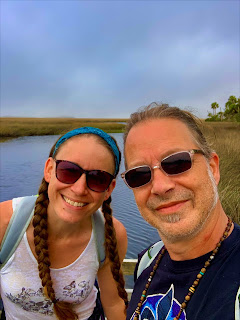
Bot and Wise Man - thank y'all for the amazing journey and thank you to land for the beauty and sustenance it provides!