|
| Steeping in beauty by the Sopchoppy River |
An immersion into beauty, steps into the unknown, a sweet reprieve from our everyday thoughts. Our journey southward was a wondrous escape - some may say - but I would call it rather a journey back to the real. Not to say that our everyday lives are not part of the real, filled with very real joy and hardships, but they are also filled with so many concerns about those things that maybe don't hold as much weight as we ascribe to them. When we awoke to the morning sun pouring through our trailer windows, we arose easily and made coffee. I spent my time coming into full consciousness researching the birds that sang in the trees overhead and contemplating what species of Saint John's Wort we'd met the day before on a nearby trail. Scott worked out lyrics to songs he'd written while hiking, inspired by the sand beneath his feet and fish jumpin' in the creek. We talked about what under-appreciated patch of woods or shoreline we may want to explore for the day, where we'd go next. We paid attention. We didn't watch a drop of television and spent our evenings instead chatting in the dim light. For the most part, we were present.
 |
| In Asheville with friends: Addy, Rachel (aka Swampalicious), Robin, Alex, and Jodi |
 |
| Walking the Mountains to Sea Trail with Rachel and Bodhi |
We three departed Pennsylvania on a bright and blustery day, rumbling down the highway, our pop-up a-frame trailer in tow. We were excited but weary. Our days had been full morning till night, and we'd hardly spent a moment planning our time away. We parked at a favorite nearly empty campground just outside Staunton, Virginia (Walnut Hills Campground) and in our trailer, with the heat blowing strong (it's an oven or an icebox in winter conditions), our minds began, just a little, to lighten.
In the morning we awoke to squawking ducks and hightailed it to Asheville, what I consider our second home. Here we were welcomed by friends, who no matter how much time passes between visits, always feel as if we're just picking up our conversation from yesterday. Nestled in the jagged Blue Ridge Mountains, we hiked, made music, ate lots of delicious food, danced with li'l babes, and laughed a whole lot. We treasured every moment. Our minds let go a little bit more, but still responsibilities of home clutched, desperately hanging on. If we forgot about them, then what?
 |
| Amos peering down the Blackwater Trail |
We needed some time on the trail. So farther south we journeyed, through the red dirt of South Carolina and the pine woods of Georgia, landing in the panhandle of Florida. Here, with the help of a trail angel, Nancy, we embarked on the 45-mile Blackwater Trail. The Blackwater Trail is an off shoot of the Florida Trail, traveling from Holt, Florida northward to the Alabama border. We took our time, setting aside five days to settle into the trail-state-of-mind and to explore this region. We walked sandy trail through towering long leaf pine woods, kicking aside enormous cones that threatened to roll ankles, wound through dark forest dabbed with cypress swamps and titi bogs, and often followed the meandering path of the sweet-tea hued Blackwater River.
 |
| Juniper Creek |
We ran from packs of coonhounds feverish on the hunt - note to self, check hunting season in advance - and weighed leaping a ribbon of flames where we'd stumbled into a prescribed burn - we wisely decided to turn 'round and reroute instead. I gazed at my mirrored reflection in pools of rainwater gathered in hollows where trees had once stood, stuck my nose in baby-powder-scented yellow jessamine flowers, crushed spicy bay leaves, and laid my hands on the peeling bark of Atlantic white cedar and the patchwork of sooty pine.
.jpeg) |
| After the burn |
 |
| Yellow Jessamine (Gelsemium sempervirens) |
We frightened armadillos in our path - especially Amos - and stumbled upon more sun-bleached bones than I'd ever found on a long-distance trek. Every night our camp was illuminated by not only, the glow of a full moon, but a sea of reflective spider eyes, so many that I wondered if the sky had turned upside down and the stars now shimmered underfoot. The full moon casts light differently in Florida pinelands than it does in our deciduous northeastern woods- it is radiant - so much that even in the forest we barely needed headlamps. At one camp, we attuned to a lone live oak and learned her name was Roselle. We were grateful to have met her and I believe she was equally thankful for our company.
 |
| Armadillo retreating |
 |
| A deer skull most likely |
 |
| Camped beside Roselle |
Red Rock Bluffs was the most outstanding portion of this trail - a massive eroding cliff of clay and sand - that abuts Juniper Creek. What a wonder to wander a path carved by water. However, my personal highlight of this five-day backpack was just one mile from its finish at a bend in Burnt Grocery Creek. I waded thigh-deep and stood in the company of cedar and sweet leaf. The yellow-tipped spires of golden club rose from clear water and brightened dark hollows between a tangle of roots that framed the shore. This place so thrummed with presence that Scott and I instantly fell quiet, and Amos curled up to snooze at the base of a tree. We were entranced. I have few pictures of this place, but its feeling is etched in my body.
 |
| Red Rock Bluffs |
After our hike, we headed farther south to the prairie, to the immense grasslands, live oak and palm hammocks that lay just north of Lake Okeechobee. This is the very first portion of the Florida Trail that we hiked back in 2018 and was the section that inspired our 2019 thru-hike. It has continued to remain one of our most cherished portions of the trail. Here, we immersed ourselves in the landscape, so much that in one moment I envisioned myself a mere red ant traveling the outstretched arms of those live oaks, wandering the desiccated lobes of resurrection fern and dangling from threads of Spanish moss. We marveled at an abundance of wildflowers in Kissimmee Prairie Preserve, candyroot, swamp leather flower, narrowleaf silkgrass, black-eyed susans and tickseeds to name a few. I brewed my first cup of wild pennyroyal tea and knew instantly that every cup I brewed thereafter would, in a sip, whisk me back to a late afternoon amidst cabbage palms and downy woodpeckers. We met numerous thru-hikers, passing out cold beverages to all and even shuttled one with a bum foot to someplace safe.
 |
Hiking one of our favorite portions of the Florida Trail between Starvation Slough and Starvation Slough North campsites
|
 |
| Resurrection Fern (Pleopeltis polypodioides) with sori where spores are produced that go on to create more resurrection fern |
 |
| Wild Pennyroyal (Piloblephes rigida) - delicious tea, minty fresh! |
 |
| Swamp leather flower (Clematis crispa) |
We dropped into Orlando to visit dear friends, Joan, Trucker Bob, Sandra and John. These folks we first met on our thru-hike, however they have continued to brighten our southern visits every year since. The people that you meet on long distance trails contain the seeds, if nurtured, for lifelong friendship. When meeting folks on a long hike you're more apt to share openly, to share stories close to the heart, to be vulnerable and to trust, more so than one might in "normal" everyday life. There's an instant kinship that manifests out of a shared love for a path, for a community, for experience in its varied forms from nature connection to human connection.
 |
| With Joan (aka Princess General) |
 |
| With Sandra and John |
Shired Island also called us back. Last year we journeyed to this little-known beach on a whim. Scott had spotted it on a map, thought it looked mighty isolated and therefore just right for us. What an oasis we found. Its shore is laden with oyster shells, new heaps every day, and in some places is mounded with shells dating back thousands of years. Indigenous people long inhabited this special strip of coast long before white man plundered its inland swamps for old growth cypress. Craggy red cedar, cabbage palms, coontie and yaupon shelter a short trail at the far most end of the beach and perch atop these very mounds, their roots comingling with eons of human existence. Driftwood laid scattered about the beach along with clumps of purple seaweed - nature's artwork at its finest.
 |
| Driftwood along Shired beach |
 |
| Shired at sunset |
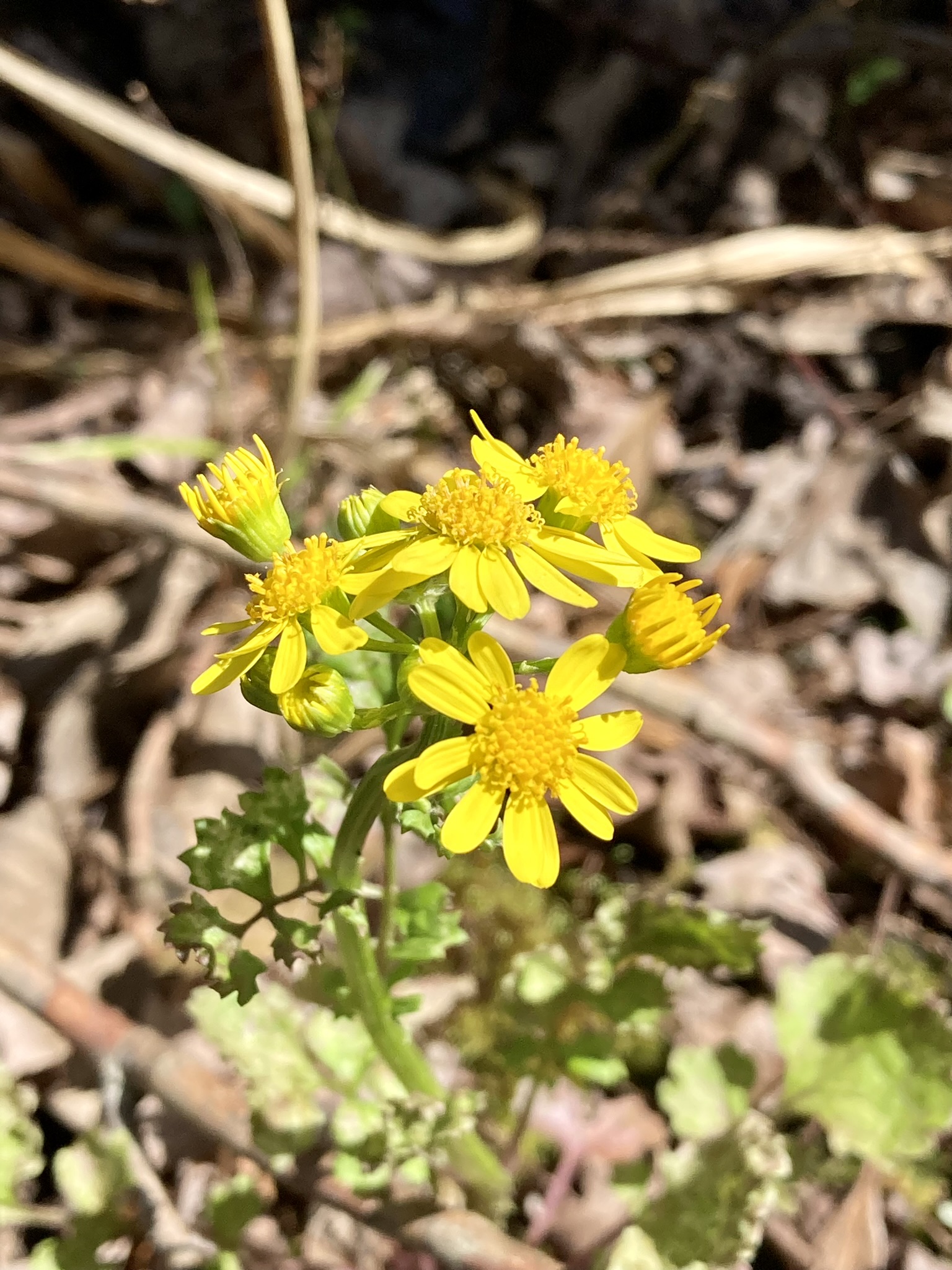
We followed the old path of the Dixie Mainline railroad and emerged in the village of Suwanee and not far from here, stumbled into the heart of the Suwanee National Wildlife Refuge. Here, countless forest roads and trails meander through floodplain forests and frequently lead to the Suwannee River itself. A crumbling grassy limestone road carried us through a diverse collection of tall pines, squat cabbage palms, and deciduous trees just beginning to put on tiny lime green spring growth. Cypress were ever present and their knobby knees protruded thick leaf litter and dark pools. The sunny flowers of butterweed illuminated the watery woods. In the treetops, redwing blackbirds perched and sang a jovial song, a perfect soundtrack for an almost spring day.
 |
| Walking trail to Weeks Landing on the Suwannee River |
 |
| Butterweed (Packera glabella) |
If you do visit Shired, make certain to say hi to Herbert J. Cannon, who collects payment for the Dixie County campground. If you stay the night, you're sure to hear his Chevy pickup gurgle into camp about 7:00 am. If you somehow miss this audible arrival, your ears will prick at his call, "I'm the money man, money, money, money, money man, whoo!" Look for the fella in his nineties, wearing a conductor's cap and a pair of overalls. His family goes way back 'round these parts, there's even a road on the island named in their honor. Herbert's got one-liners for days and is in love with ol' Shired. Said he went to the big city once (Orlando that is) back in the '50's, so many folks there they was like bugs and he ain't never goin' back!
 |
| Keep an eye out for Herbert - be sure to say hi! |
Next stop, Saint Marks Wildlife Refuge. Always on our trip south, we spend at least one full day walking these long levees between channels of sparkling water and expanses of marsh grass that stretch to the ocean. Here, a lone flamingo that resides that we desperately hoped to see as we did last year, however despite our unique mingo calls (don't ask), she did not appear. Instead, we were graced by a belted kingfisher, dozens of coots, sing-songy Carolina wrens and yellow rumped warblers, and a hard-at-work downy woodpecker. I was particularly impressed by the waterside palm-size nests carefully constructed in wax myrtle. Do any of my birding people know to whom these may belong? If I were a bird, I would surely choose such a perch, imagine the warm morning sun or the quiet of the night.
 |
| Saint Mark's National Wildlife Refuge |
 |
| A baby gator in marsh grasses |
 |
| Spiderwort (Tradescantia ohiensis) - tasty blossoms! |
 |
| Who does this nest belong to? |
A short drive led us into Apalachicola National Forest, a land of fragrant flowering titi, smoky air and charred pine trunks, and swamps that smell of leather and licorice. Here we parked the trailer in a sea of saw palmetto beneath a canopy so tall it seemed to meet the sky. We reveled in hiking the Florida Trail along the Sopchoppy River where ancient cypress stood amidst black water and white sandy shoals and in rediscovering an all but forgotten portion of trail near the Wakulla River. The yellow faces of Saint John's Wort abounded and sure signs of spring we found in the blossoms of sweet pinxter azalea.
.jpeg) |
| Camp in Apalachicola National Forest |
 |
| Titi (Cliftonia monophylla) - a prolific and fragrant shrub in the national forest |
 |
| Sweet pinxter azalea (Rhododendron canescens) |
Tate's Hell beckoned. We'd long heard the dark tales of that swampy region that lay just south of Apalachicola National Forest, but never had we really felt the call to explore it. Now it was irresistible. We located one single hiking trail in its 200,000 acres, the High Bluffs Coastal Trail, and set out, hoping to not lose our way or our hound like poor ol' Cebe Tate. (Follow this link to read the legend of Cebe Tate:
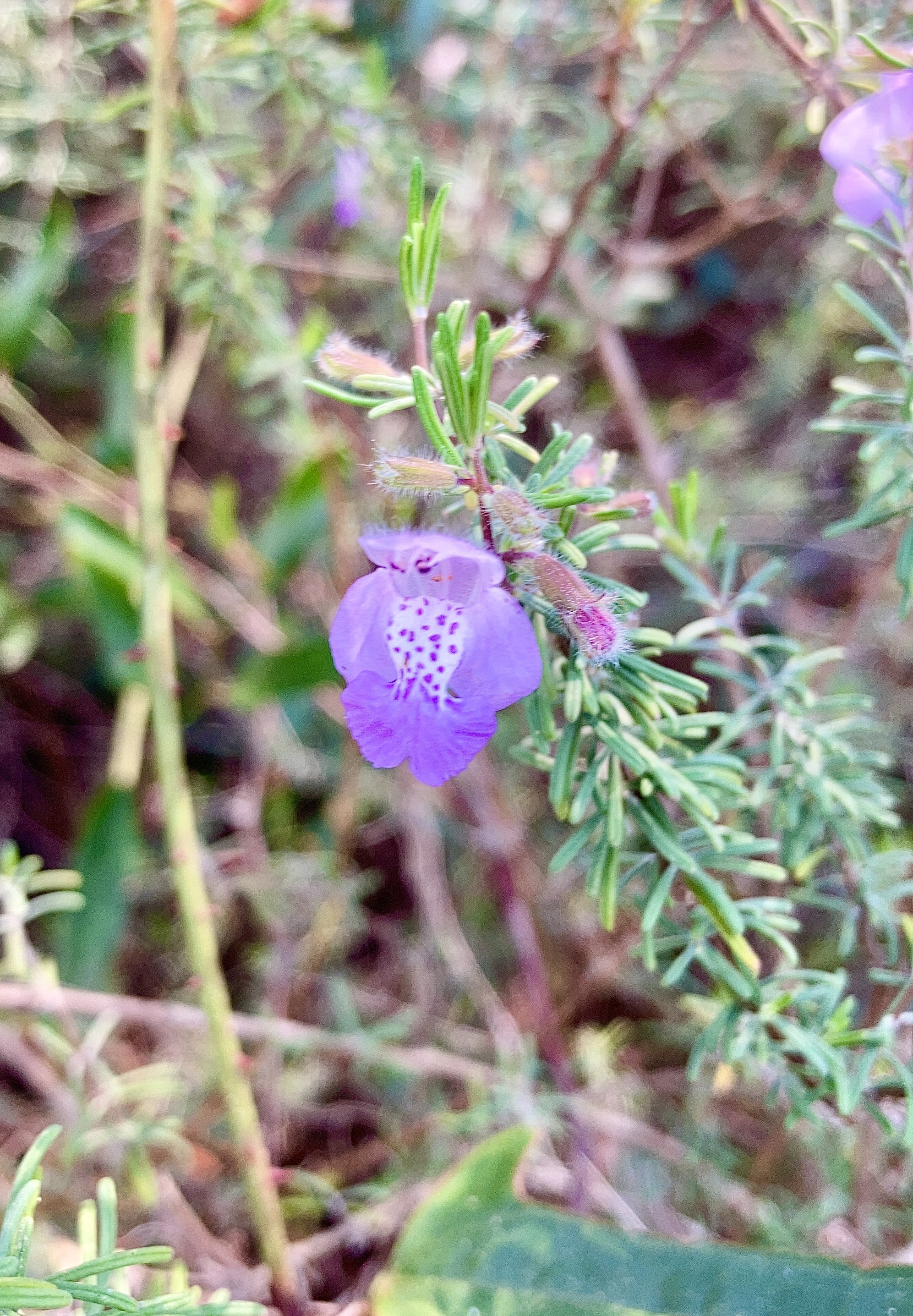
The Legend of Tate's Hell Historical Marker (hmdb.org)). We expected to be sloshing through cypress bogs and mucking through mud, none of which occurred. Instead, we wandered a garden of false rosemary and Saint John's wort, crossed sturdy bridges around knee-deep puddles, and crouched in corridors of titi shrubs. We were enchanted.
 |
| Tate's Hell State Forest trailhead |
 |
| Amos forgoing the boardwalk and taking a dip instead - don't blame him, temps were in the mid-eighties! |
 |
| False rosemary (Conradina canescens) |
However, we did make one mistake. At the trailhead kiosk, we picked up a map of the region, one that clearly showed the many forest roads within Tate's Hell and its array of campsites. This map also provided a bird's eye view of where Tate's Hell lay in relation to the national forest and a host of other protected wilderness areas. The map was a siren's call and we answered. We went in search of a campsite in the heart of Tate's Hell, giddy with anticipation, following narrow sand roads through corridors of swamp. That is, until we came to a lake that swallowed our path. Our only option - to turn back- but there was no turning around. We were not only a pickup truck but hauling a trailer, we had an 18-foot extension. Scott put it in reverse and while Amos and I hung our heads out the window directing, he carefully backed up the way we had come until we reached another narrow crossroads where we could turn around. The day was getting late and so we decided then that we'd head back to more familiar turf. But it was too late. Tate's Hell had us in its grasp - we'd end up spending the night in a muddy tract beneath powerlines in the hopes that we'd manage to drag the trailer out in the morning. I have no photos of this campsite, save for the dewy bowl-shaped spiderwebs that we found in the morning.
 |
| Always a joy to see these spider webs in the morning dew in Florida - I believe they are made by sheet weaver spiders |
We managed to escape the web of our own making and ventured down yet one more forest road, crossing rickety wooden bridges barely the width of our trailer where I said prayers for safe passage, and paid a visit to a dwarf cypress swamp. What a magical swath of land. Stunted cypress with gray peeling bark and buttressed trunks topped out at roughly twenty feet, their craggy branches lichenized and spiked with air plants. In the tannic oily water floated great big lily pads and the delicate rootlets of yellow bladderworts.
 |
| Dwarf cypress swamp in Tate's Hell State Forest - a must see! |
 |
| Lily pads and cypress reflection |
Uneventfully, we cruised out of Tate's Hell, re-entering the everyday world that stretches in either direction at its southernmost border. For the first time we explored the Forgotten Coast, following route 98 along the sparkling ocean into Carabelle and East Point. We discovered Alligator Point and considered property bordered with live oak and a palm-lined pond. We crossed bridges that felt like surely they'd carry us into the heavens, blue below and blue above, to the charming village of Apalachicola and Saint George Island. Our dear friend Rachel first introduced us to Apalachicola, and we looked forward to appreciating it without constantly hungry stomachs and sore feet. This historical fishing village is still remarkably colorful but quaint, filled with sweet gift shops and eateries. It was a Saturday and town was abuzz. We made one full pass around the main square before Amos had a meltdown. Amos does not do towns - of any size - especially not towns where people love dogs and everyone wants to pet you. Amos dragged me to a side street out of the hustle and bustle and simply sat down, refusing to budge. So, there I sat with him while we waited for Scott to retrieve us with the truck.
 |
| Gulf shore along Route 98 |
 |
| In the village of Apalachicola |
 |
| Amos prefers the country life to towns and cities |
Back to the pine flatwoods we went! All three of us now ready to retreat to the solitude and quietude of the forest. The saw palmetto and long leaf pines welcomed us back wholeheartedly and we basked in yet a couple more days of rolling along the Sopchoppy, meandering through cypress swamps on winding boardwalks, and professing our love to a land that had given so generously.
 |
| Sopchoppy River |
 |
| Amos taking a boardwalk through a cypress swamp near to the Wakulla River on the Florida Trail |
 |
| Swamp maple samaras (Acer rubrum) |
Our last night amidst the palm and pines, I remarked to Scott about how very empty my mind was. I no longer felt the insistent buzz of thoughts, of to-dos, of concerns that sometimes border on obsession. He revealed that he felt much the same. But I didn't
feel empty, at loose ends, as one might if suddenly thrust into not doing. I just
felt, and
heard, and
smelled, and
tasted - enwrapped in the forest, seen by the trees, lulled by the shadowy hoot of a barred owl and wild yowl of nearby coyotes, the smell of smoke and charred earth and pine on the air, the taste of salt air on my lips. We'd done it, we'd let go. And by God, we'd do our best to carry it back, this feeling, this presence, this nowness, and let it ripple out.
 |
| Pine flatwoods in Apalachicola National Forest |
When folks ask me how our trip went, my best response is that we were steeped in it, a beauty infusion. We connected to this place in way that I think we were just beginning to sense some years ago on our thru-hike. It takes time to connect to a place that is at first so very otherworldly, but we wanted it, we were open to it, and did our best to honor its otherness. I feel as if we have now been welcomed and just as this landscape has become a part of us, we are a part of the land. I hope that all of you, my readers, in the coming months experience your own infusion of beauty. We may have traveled far, but faraway travels are not necessary, beauty lay all around us.
Thank you to the friends, new and old, who made this journey so special. Thank you to the land. Thank you to the towering pine and the gnarly live oak, the buttressed cypress, and the fragrant titi. Thank you to the redwing blackbirds and the yellow rumped warblers. Thank you to the candyweed and pennyroyal. Thank you.


.JPEG)

.JPG)
.JPG)
.JPEG)


.jpeg)




.jpeg)